Core Business, Missing Skills: The Case for Bereavement Training in Primary Care
by Prof. Lucy Selman, Co-Director, Good Grief Festival
Death is one of life’s certainties, yet in the bustling environment of primary care, the profound silence of bereavement often goes unaddressed [1].
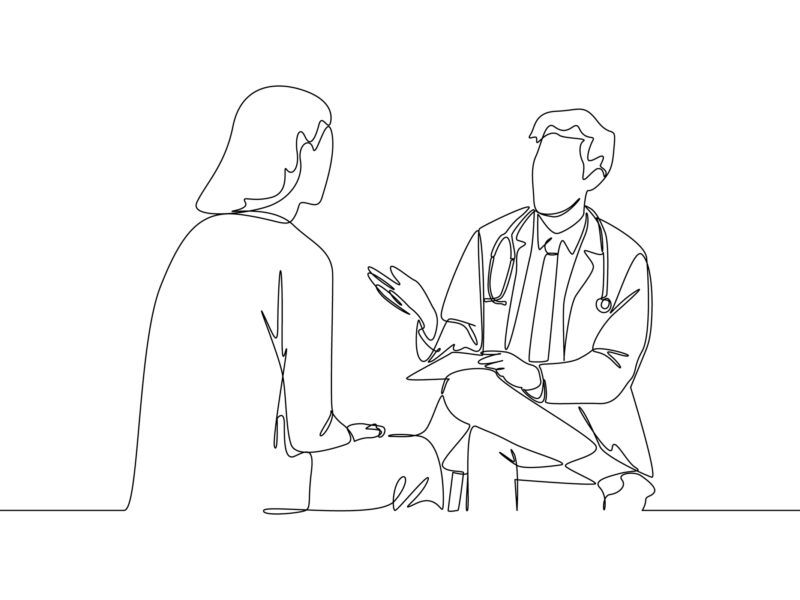
With the average full-time GP experiencing approximately 22 patient deaths a year,1 supporting bereaved people is not an optional extra; it is a fundamental pillar of general practice [2]. Indeed, the RCGP’s Daffodil Standards explicitly positions high-quality bereavement support as a core component of care, urging teams to move beyond ad-hoc responses toward consistent, evidence-based support [3].
The training gap
Despite this clear remit, a significant training gap remains. In a recent study in Portugal, 74.8% of family physicians reported having no formal training in grief support [4]. Consequently, over half of the clinicians surveyed contacted fewer than 25% of bereaved families. The situation in the UK is similar [1,2].
This lack of training exacerbates a difficult tension in primary care: the anxiety of “medicalising” a normal human experience versus the risk of abandoning vulnerable patients to cope in isolation [1,2]. Evidence suggests that GPs often assume patients who do not contact them are coping well with their social support networks [2, 5, 6]. Patients, meanwhile, may feel overwhelmed or ashamed to ask for help [7].
The clinical stakes
The stakes of inaction are high. Bereavement is a major risk factor for physical and mental morbidity, and even increased mortality [8,9]. Without the tools to identify risk factors and distinguish between typical and complex grief reactions, clinicians may miss opportunities to intervene. There are also common knowledge gaps concerning local bereavement services and where to refer patients, increasing the likelihood of prescribing medication [6, 10,11] to treat symptoms like insomnia or anxiety, rather than helping patents find the support they need in their grief.
The impact on the clinician
In this context, we cannot ignore the impact on clinicians. We know that GPs frequently experience guilt, sadness, and isolation following a patient’s death [1,4,12]. Clinicians with personal experiences of grief might be more likely to empathise [4], but also to feel the emotional burden of the loss. Without structural support and training, the emotional toll of carrying these losses can contribute significantly to professional burnout. In this context, training extends beyond patient care, helping clinicians support their own wellbeing and professional resilience.
Bridging the gap
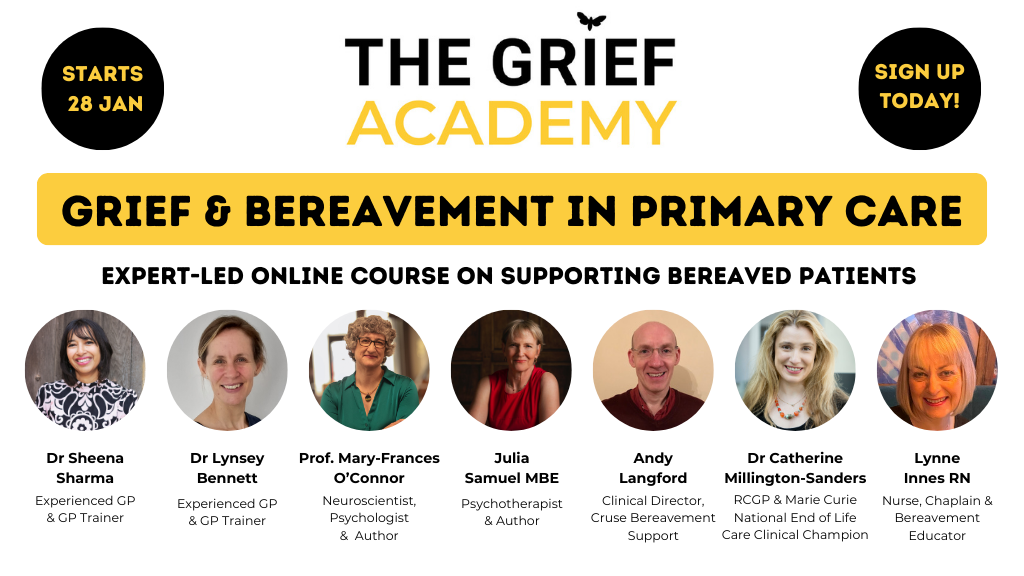
We must move beyond reactive care. To bridge the gap between uncertain silence and compassionate competence, we invite you to join our upcoming new course, Grief and Bereavement in Primary Care, which starts on 28th January.
Developed by the Good Grief Festival team with GPs and GP trainers, the course is evidence-based, practical, and specific to the challenges of primary care. It is also approved by the Federation of the Royal Colleges of Physicians of the United Kingdom for 4 CPD credits. Join us to gain the confidence, skills, and knowledge to make a meaningful difference in your patients’ lives – and your own.
1 Approximately 1% of the population served by a GP practice will die every year. For a full-time GP with a patient list of 2,200 patients, this equates to 22 patient deaths per year.
References
[1] Pearce C, Wong G, Kuhn I, Barclay S. Supporting bereavement and complicated grief in primary care: a realist review. BJGP Open. 2021 Jun 30;5(3)
[2] Nagraj S, Barclay S. Bereavement care in primary care: a systematic literature review and narrative synthesis. Br J Gen Pract. 2011 Jan;61(582):e42-8
[3] RCGP & Marie Curie. The Daffodil Standards.
[4] Leite Costa F, Barbosa M. Follow- up of grieving families in general and family medicine: a cross- sectional study on the practices and attitudes of family doctors. Fam Med Com Health 2025;13.
[5] Wiles R, Jarrett N, Payne S, Field D. Referrals for bereavement counselling in primary care: a qualitative study. Patient Educ Couns. 2002 Sep;48(1):79-85.
[6] O’Connor M, Breen LJ. General practitioners’ experiences of bereavement care and their educational support needs: a qualitative study. BMC Med Educ. 2014;14(1):59.
[7] Feigelman W, Sanford RL, Cerel J. Do primary care physicians help the bereaved with their suicide losses: loss survivor perceptions of helpfulness from physicians. Omega. 2020;80(3).
[8] O’Connor MF. Grief: A Brief History of Research on How Body, Mind, and Brain Adapt. Psychosom Med. 2019 Oct;81(8).
[9] Stroebe M, Schut H, Stroebe W. Health outcomes of bereavement. Lancet. 2007 Dec 8;370(9603):1960-73.
[10] Foggin E, McDonnell S, Cordingley L, et al. GPs’ experiences of dealing with parents bereaved by suicide: a qualitative study. Br J Gen Pract. 2016;66(651).
[11] Guldin M-B, Vedsted P, Jensen AB, et al. Bereavement care in general practice: a cluster-randomized clinical trial. Fam Pract. 2013;30(2).
[12] Erickson JA, O’Brien BC, Nouri S. How Primary Care Clinicians Process Patient Death: Logistics, Emotions, and Opportunities for Structural Support. J Gen Intern Med. 2024 Sep;39(12)